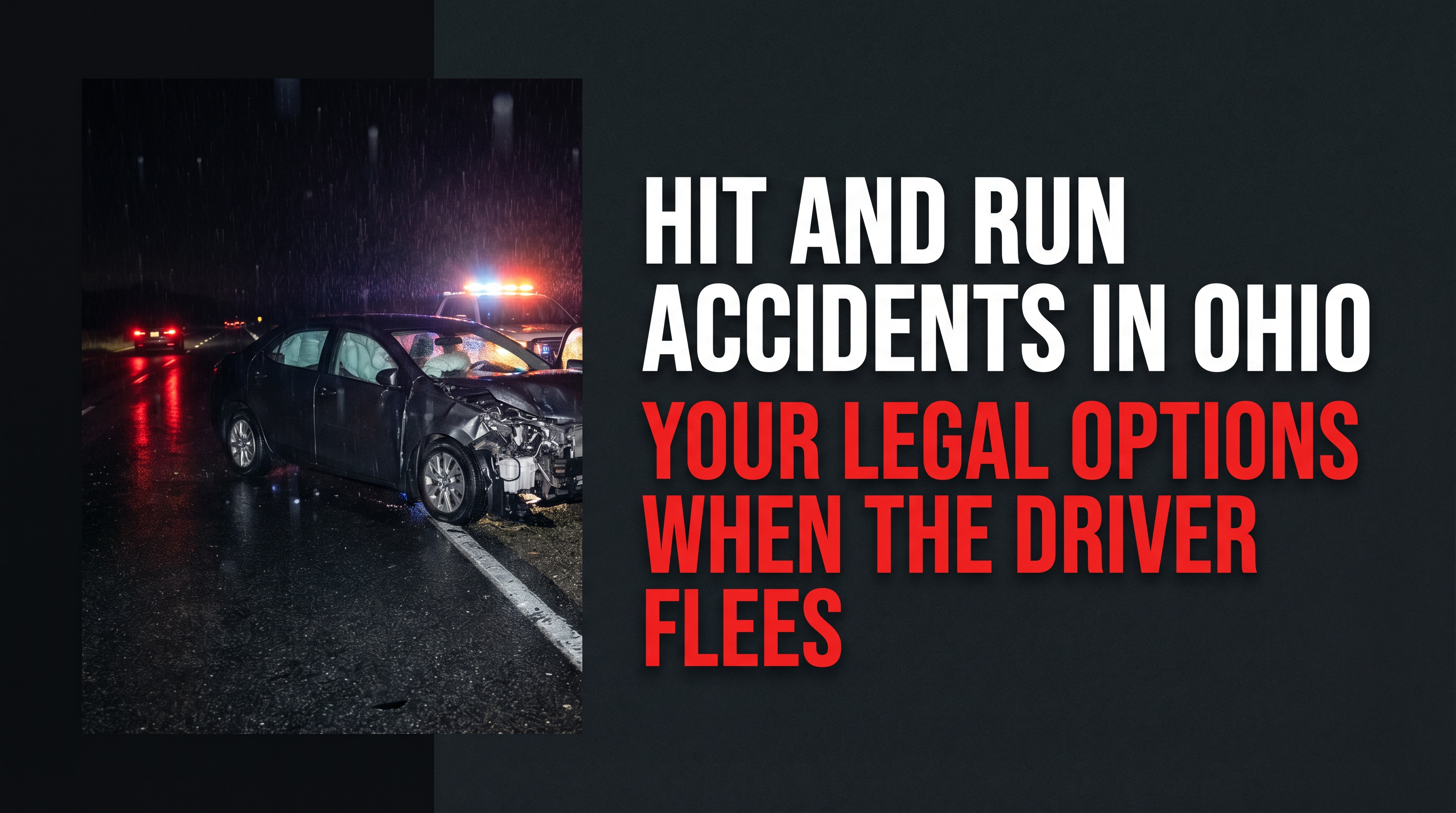
A hit-and-run accident is one of the most frustrating and terrifying experiences a driver can face. You are left injured, your vehicle is damaged, and the person responsible has vanished into the night. In Cuyahoga County, hit-and-run crashes are alarmingly common, particularly late at night or in areas with heavy bar and restaurant traffic. While it may feel like you have no options when the at-fault driver flees, Ohio law provides specific avenues for financial recovery. You are not out of luck, but you must act quickly and strategically.
The Criminal Nature of Hit-and-Run in Ohio
Fleeing the scene of an accident is a serious crime. Under Ohio Revised Code Section 4549.02, any driver involved in a collision that results in injury, death, or property damage is legally required to stop immediately, remain at the scene, and exchange information. Failing to do so is a first-degree misdemeanor if the accident only caused property damage. However, if the crash resulted in serious physical harm or death, the charge escalates to a felony, carrying mandatory prison time and a severe license suspension.
Because the stakes are so high, drivers who flee usually do so because they are hiding something else: they are driving under the influence (OVI), they have a suspended license, they have active warrants, or they are driving a stolen vehicle.
Immediate Steps to Take After a Hit-and-Run
If you are the victim of a hit-and-run, your actions in the first few minutes are critical for both your physical safety and your legal case:
- Do Not Chase the Driver: This is incredibly dangerous. High-speed pursuits often lead to secondary, more severe accidents. Furthermore, you do not know who is in the other vehicle or if they are armed.
- Pull Over and Call 911: Move to a safe location and call the police immediately. Tell the dispatcher it was a hit-and-run and provide the direction the fleeing vehicle was traveling.
- Write Down Everything You Remember: Human memory degrades rapidly under stress. Immediately write down or dictate into your phone every detail you can recall about the fleeing vehicle: make, model, color, license plate (even a partial plate is huge), distinctive damage, bumper stickers, and a description of the driver.
- Look for Witnesses: Bystanders may have seen the crash or caught the license plate number. Get their names and phone numbers before they leave the scene.
How Police Investigate Hit-and-Run Crashes
Law enforcement agencies in Northeast Ohio, including the Cleveland Police Department, take hit-and-run accidents seriously, especially when injuries are involved. They will use the information you provide to run partial plate searches, check local auto body shops for vehicles matching the description with fresh damage, and review traffic camera footage.
Cuyahoga County has an extensive network of traffic cameras, and many local businesses have outward-facing security cameras. However, this footage is often overwritten within 48 to 72 hours. An experienced attorney will immediately send preservation letters to local businesses and municipalities to secure this footage before it is lost.
Financial Recovery: Uninsured Motorist Coverage
If the police are unable to locate the hit-and-run driver, your primary avenue for financial recovery is your own Uninsured Motorist (UM) coverage. In Ohio, a hit-and-run driver is legally classified as an uninsured motorist.
To successfully file a UM claim for a hit-and-run, your insurance policy will likely require two things:
- Prompt Reporting: You must report the accident to the police promptly (usually within 24 hours) and notify your insurance company shortly thereafter.
- Independent Corroborative Evidence: To prevent fraudulent claims (e.g., a driver falling asleep, hitting a tree, and claiming a "phantom vehicle" ran them off the road), insurance companies require independent evidence that another vehicle was involved. This can be physical evidence (paint transfer on your car) or testimony from an independent witness.
What Happens if the Driver is Found?
If the police or your attorney's private investigator successfully identifies the hit-and-run driver, you can pursue a standard third-party liability claim against their insurance policy. Furthermore, because fleeing the scene is an intentional, malicious act, you may be entitled to seek punitive damages in addition to your compensatory damages (medical bills, lost wages, pain and suffering).
Don't Give Up Hope After a Hit-and-Run
Being the victim of a hit-and-run is traumatic, but you have legal options. At Ryan Injury Attorneys, we have the resources to investigate these complex cases, secure critical camera footage, and aggressively pursue your UM claim if the driver cannot be found.
If you were injured in a hit-and-run in Cleveland or Cuyahoga County, contact us today for a free consultation. We will fight to ensure you are not left paying the price for someone else's cowardly actions.
Frequently Asked Questions
Will my insurance rates go up if I file a UM claim for a hit-and-run?
Generally, no. Under Ohio law, your insurance company cannot raise your premiums solely because you filed an Uninsured Motorist claim for an accident that was entirely the fault of another driver, even if that driver is unknown.
What if I only got a partial license plate number?
A partial plate number is incredibly valuable. When combined with the make, model, and color of the vehicle, law enforcement can often narrow down the search to a handful of registered vehicles in the area, making it much easier to identify the culprit.
Can I sue the bar that served the drunk driver who hit me?
If the hit-and-run driver is identified, and it is proven they were driving under the influence, Ohio's Dram Shop Act (O.R.C. § 4399.18) may allow you to sue the establishment that over-served them. However, you must prove the establishment knowingly served a noticeably intoxicated person, which requires prompt investigation and witness testimony.
How long do I have to report a hit-and-run to my insurance company?
Your policy dictates the exact timeframe, but it is usually very short—often within 30 days, and sometimes as little as 72 hours for the initial police report. Failing to meet these strict contractual deadlines can result in a complete denial of your UM claim.
What if the hit-and-run driver was driving a stolen car?
If the driver is identified but was operating a stolen vehicle, the vehicle owner's insurance will likely deny coverage, as the vehicle was taken without permission. In this scenario, you would again turn to your own Uninsured Motorist coverage for compensation.