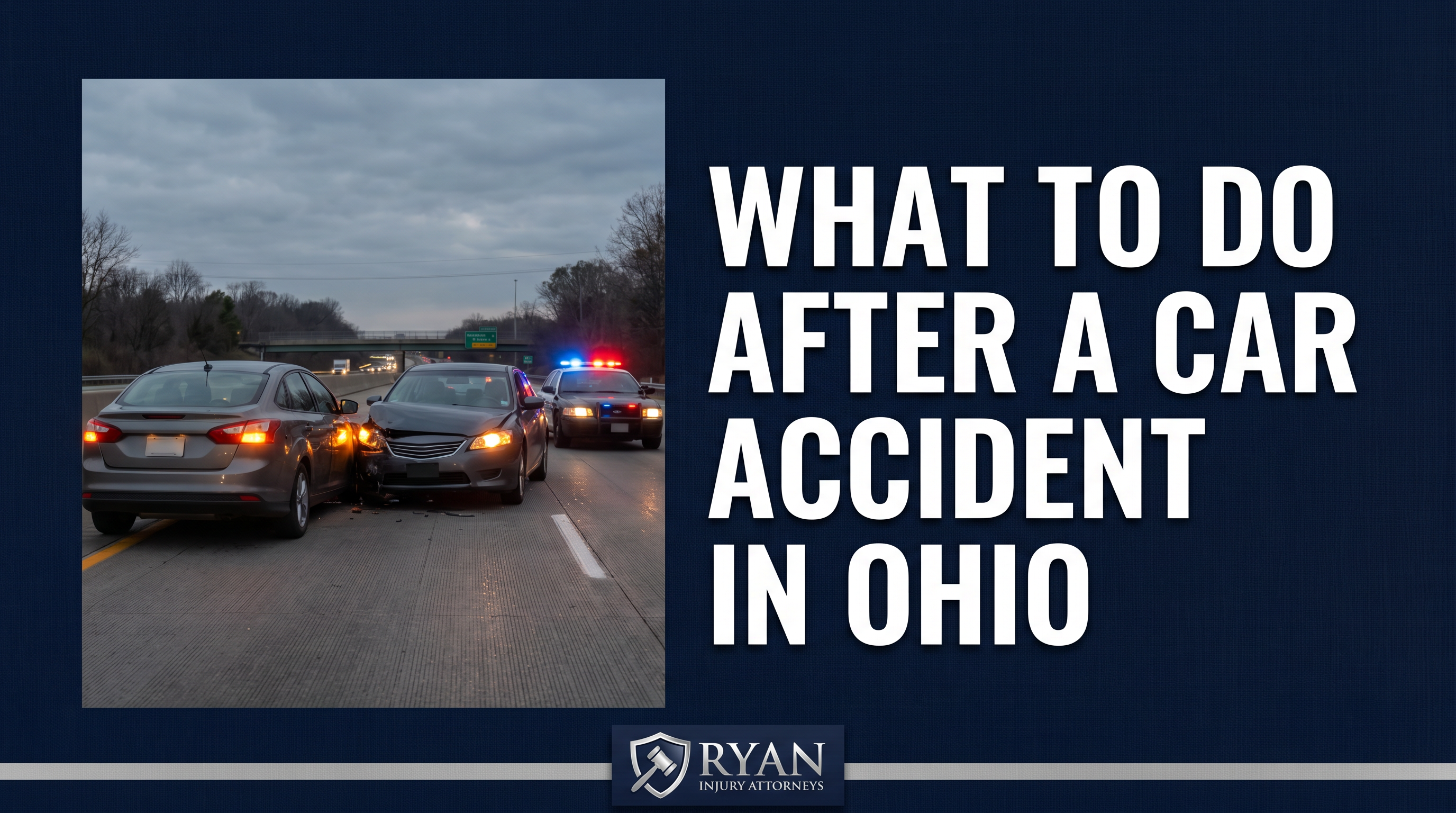
The first sixty seconds after a car accident in Ohio are chaotic, disorienting, and legally consequential. In the immediate aftermath of a crash, adrenaline masks physical pain, and the shock of the impact makes it difficult to think clearly. However, what you do—and fail to do—in the hours following a collision can determine whether you recover full compensation for your injuries or far less than you deserve. This comprehensive guide outlines the exact steps you must take to protect your health, preserve critical evidence, and safeguard your legal rights under Ohio law.
1. Stop, Secure the Scene, and Call 911
Under Ohio Revised Code Section 4549.02, you are legally required to stop at the scene of any accident involving injury, death, or property damage. Failing to stop and remain at the scene can result in criminal hit-and-run charges, which carry severe penalties including license suspension and potential jail time.
If your vehicle is operable and it is safe to do so, move it to the shoulder or out of the immediate flow of traffic to prevent secondary collisions. Turn on your hazard lights. Call 911 immediately, even if the other driver attempts to persuade you to handle it privately. Having a police officer document the scene is critical. The resulting crash report from the Cleveland Police Department, the Ohio State Highway Patrol, or the local municipal department will serve as a foundational piece of evidence in your injury claim.
2. Seek Immediate Medical Attention
Your physical health is the absolute priority. Even if you feel fine or believe your injuries are minor, you must be evaluated by a medical professional as soon as possible. Adrenaline is a powerful painkiller, and serious injuries such as whiplash, concussions, traumatic brain injuries (TBI), and internal bleeding often do not present severe symptoms until hours or even days after the impact.
From a legal perspective, a gap in medical treatment is the primary reason insurance companies deny or devalue claims. If you wait a week to see a doctor, the insurance adjuster will argue that your injuries were caused by an intervening event, not the car accident. Go to the emergency room, an urgent care center, or your primary care physician the same day. In Cuyahoga County, facilities like the Cleveland Clinic or University Hospitals have specialized trauma centers equipped to diagnose crash-related injuries.
3. Document the Scene and Gather Evidence
If you are physically able to do so safely, use your smartphone to gather evidence before the vehicles are moved and the scene is cleared. This evidence is highly perishable and is often lost forever once the tow trucks arrive.
- Photographs: Take wide shots of the entire intersection or stretch of road, showing the final resting positions of the vehicles. Take close-ups of the property damage to all vehicles involved, skid marks, debris on the road, traffic signals, and weather conditions.
- Video: Record a continuous video walking around the scene to capture the context of the crash.
- Witnesses: Obtain the names and phone numbers of anyone who saw the crash. Independent witness testimony is incredibly powerful in disputed liability cases. Do not rely solely on the police to gather this information; officers often miss witnesses in the chaos of securing the scene.
- Information Exchange: Obtain the other driver's name, contact information, insurance company, policy number, and license plate number. Take a photo of their insurance card and driver's license if they permit it.
4. Be Careful What You Say
Do not apologize. Do not say "I didn't see you," "I'm sorry," or "I think I'm okay." In Ohio, which follows a modified comparative fault system, any admission of fault—even a polite apology—can be used against you to reduce your compensation or bar your recovery entirely.
When speaking to the responding police officer, stick strictly to the objective facts. Do not guess, estimate speeds, or speculate about distances. If you do not know the answer to a question, the correct and only answer is "I don't know."
5. Report the Accident to Your Insurance Company
Your auto insurance policy contains a cooperation clause that requires you to report any accident promptly. Call your insurer and provide the basic facts: where the accident happened, when it happened, and who was involved. However, you should decline to give a recorded statement until you have consulted with an attorney.
6. Do Not Speak to the Other Driver's Insurance Company
Within days—sometimes hours—of the crash, you will likely receive a call from the at-fault driver's insurance adjuster. They are trained professionals whose primary goal is to minimize the financial exposure of their company. They may sound friendly and concerned, but they are looking for information to use against you.
They will ask for a recorded statement and may try to get you to admit partial fault or downplay the severity of your injuries. You have no legal obligation to speak with the at-fault driver's insurance company. Politely decline to give a statement, refuse to sign any medical authorization releases they send you, and direct all communication to your attorney.
7. Understand the Statute of Limitations
Time is not on your side. Under Ohio Revised Code Section 2305.10, you generally have exactly two years from the date of the accident to file a personal injury lawsuit. If you miss this deadline, you lose your right to seek compensation forever. While two years may seem like a long time, investigating the crash, reaching maximum medical improvement, and negotiating with insurance companies takes significant time. Do not wait to seek legal counsel.
8. Consult with an Ohio Personal Injury Attorney
Navigating the aftermath of a car accident is a complex legal process. An experienced personal injury attorney will handle all communication with the insurance companies, gather and preserve evidence, consult with medical and accident reconstruction experts, and build a strong case for maximum compensation.
Protect Your Rights After an Ohio Car Accident
If you or a loved one has been injured in a car accident in Cleveland or anywhere in Cuyahoga County, immediate action is required. Evidence disappears quickly, and the insurance company is already building a case against you.
Contact Ryan Injury Attorneys today for a free, confidential consultation. We will review the facts of your crash, explain your legal options, and fight to secure the compensation you deserve for your medical bills, lost wages, and pain and suffering.
Frequently Asked Questions
Do I have to call the police for a minor fender bender in Ohio?
Yes, it is highly recommended. Even if the damage appears minor, a police report provides an objective, third-party record of the incident. Furthermore, injuries like whiplash may not be immediately apparent. Without a police report, the other driver may later deny the accident happened or change their story regarding fault.
What if the other driver does not have insurance?
If you are hit by an uninsured driver in Ohio, you can file a claim under your own Uninsured Motorist (UM) coverage, provided you elected to carry it on your policy. Your insurance company steps into the shoes of the at-fault driver to compensate you for your injuries, up to your policy limits.
Should I accept the first settlement offer from the insurance company?
No. The initial settlement offer is almost always a lowball figure designed to close the claim quickly and cheaply, often before the full extent of your injuries is known. Once you accept a settlement and sign a release, you cannot go back and ask for more money later, even if you require surgery.
How much does it cost to hire a car accident lawyer in Cleveland?
Personal injury attorneys, including Ryan Injury Attorneys, work on a contingency fee basis. This means there are no upfront costs or hourly fees. The attorney only gets paid a percentage of the final settlement or verdict if they successfully recover compensation for you. If you do not win, you do not pay attorney fees.
What if I was partially at fault for the accident?
Under Ohio's modified comparative fault law, you can still recover compensation as long as you are not more than 50% at fault for the accident. However, your total compensation will be reduced by your percentage of fault. If you are found to be 51% or more at fault, you are barred from recovering any damages.